





Roots – more than a story of one family

ROOTS TRANSFORMED HOW AMERICA UNDERSTOOD SLAVERY, ANCESTRY AND SO MUCH MORE
By LM Villagran
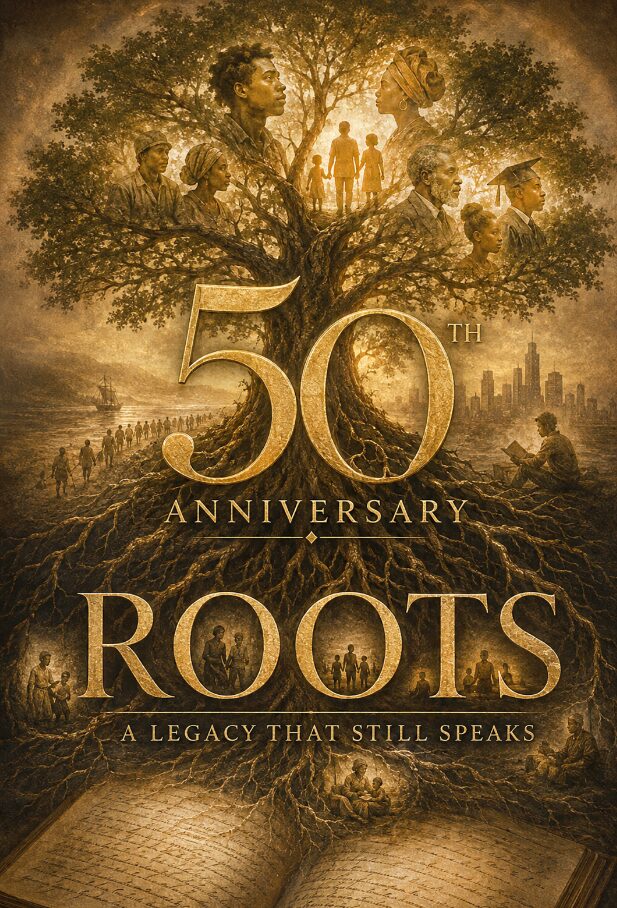
Fifty years ago, Roots did more than tell the story of one family — it transformed how America understood slavery, ancestry and the enduring strength of the human spirit. Through the unforgettable journey of Kunta Kinte and his descendants, Alex Haley gave millions of people a deeper connection to history while inspiring families around the world to seek, preserve and take pride in their own origins.
But behind this monumental work was Dr. My Haley — Alex Haley’s wife, trusted intellectual partner and an essential force in bringing Roots to life. Working beside him, she helped organize an enormous body of research, examine historical and cultural materials, shape the narrative and protect the emotional truth and dignity at the heart of the Haley family’s story. Her contributions helped turn generations of pain, survival and resilience into a work that changed literature, television and American culture.
In this exclusive interview marking the 50th anniversary of Roots, Dr. Haley reflects on the book’s extraordinary creation and worldwide impact, the lessons she learned from Alex, and her own distinguished journey as an educator, scholar and author. She also offers a timely warning about the dangers of forgetting history — and a powerful reminder that storytelling can be an act of truth, healing and liberation.
As Dr. Haley makes clear, Roots is not merely a story from the past. Its spirit remains alive, calling each new generation to honor its ancestors, seek the truth and claim its place in history.
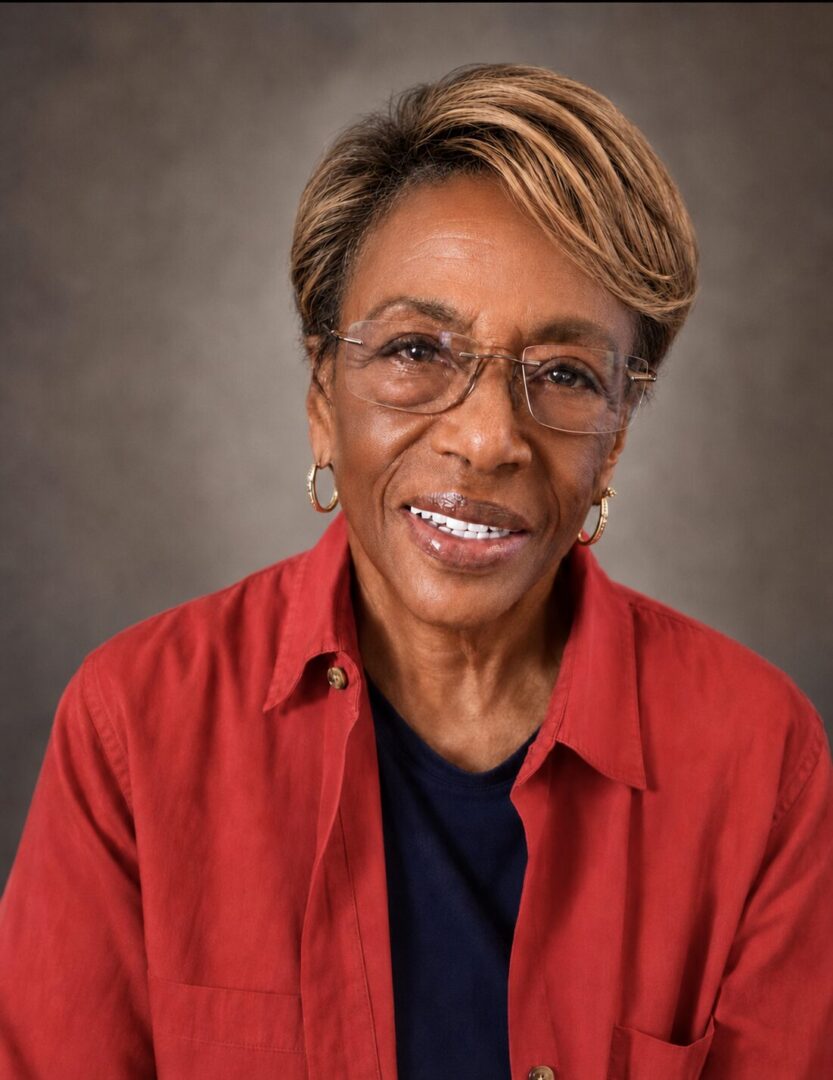
Dr. My Haley, an essential force in bringing Roots to life
Fifty years after Roots, what do you hope people still understand about its legacy?
I hope people understand that its legacy is not just historical — it is human. Roots cracked open a silence in America. It forced a nation to confront the truth that the story of Black people is not a footnote to American history but one of its central pillars. Alex accomplished something extraordinary: he made ancestry personal. He showed that when you trace a single family’s journey with honesty and dignity, you illuminate the journey of millions.
Roots showed people that the dark legacy of slavery is not only one of pain, humiliation and shame, but that it’s also a story about the resilience and spirit of a people. In doing so, it demonstrated the power of story to heal. It reminded all of us that identity is strengthened, not threatened, by truth. It allowed us to understand that when people see themselves reflected in history — fully, accurately, and without apology — they stand taller. They love themselves more fiercely. They claim their place in the world with greater certainty.
I hope people still recognize that Roots was never just about the past. It was a call to responsibility. A call to curiosity. A call to empathy. It asked every reader and viewer to look at their own lineage and ask: What stories have I inherited? What stories live on in me?
If that spirit endures — if people continue to seek truth, honor their ancestors, and tell their stories with courage — then the legacy of Roots is alive and doing exactly what Alex intended.
How has your own journey as an educator, author, and scholar shaped your life’s work?
My journey has taught me that knowledge is more valuable when it transforms people. I have always understood education as an act of liberation. Whether I am teaching in a classroom, writing a book, or guiding a community of thinkers and creators, my purpose has been to help people see themselves more clearly and claim the fullness of their own stories.
As an educator, I learned how to listen — deeply, without interruption. Students taught me that every person carries a universe inside them, and that my role is not to impose answers but to help them discover their own. That discipline of listening became the foundation of my writing.
As an author, I have learned how to translate lived experience into narrative truth. Writing requires courage, humility, and a willingness to revisit the places in your life that shaped you. It is how we preserve wisdom, challenge injustice, and share the lessons that shaped us.
As a scholar, I learned how to honor complexity. Research taught me patience. It taught me rigor. It taught me that the deeper you dig, the more you realize how much remains unseen. Scholarship gave me the tools to build bridges between history, culture, and personal identity — and to do so with accuracy and respect.
Everything I do — every book, every lecture, every podcast, every project — comes from that commitment.
What role did you play behind the scenes in the creation of Roots?
I worked side by side with Alex as he built the story, helping him organize the massive body of research into a coherent, emotionally resonant arc. I was a structural thinker, a developmental editor, a cultural interpreter, and a steadying partner.
I sifted through historical documents, oral histories, and cultural materials, identifying what was essential and what would strengthen the narrative. I helped him translate raw draft materials into storytelling that ensured that the emotional truth of his family’s journey remained intact.
I also served as a critical reader and editor, challenging the work when it needed to be sharper, more accurate, or more human. And when the weight of the project became overwhelming — as it often did — I helped to keep us moving forward and stay true to Alex’s vision.
We talked a lot about how the story would land in Black communities, in academic circles, and in the broader American consciousness. Together we were committed to ensuring that the work honored our ancestors, respected the truth, and carried the dignity that the subject matter demanded.
What do you remember most about seeing Roots become a worldwide phenomenon?
It happened so fast. It was as if millions of people, across countries and cultures, suddenly leaned forward at the same time and said, “This story matters. These people matter. This history matters.” I had a front row seat to a moment when the world’s understanding of Black identity, ancestry, and humanity shifted.
I remember the letters — thousands of them — from people who had never seen themselves reflected in history with dignity before. I remember families gathering around their television night after night, treating the broadcast like a sacred ritual. I remember elders saying, “For the first time, my grand-children understand who we are.” Roots made trauma speakable and pride visible.
One day we were working quietly, buried in narrative structure; the next day, the world was calling, responding, debating, celebrating.
It was overwhelming in the best way — because I knew the story was doing exactly what it was meant to do. It was opening doors of consciousness that had been closed for centuries.
But what stays with me most is the sense of responsibility. Watching Roots become a global phenomenon reminded me that storytelling shapes how people see themselves and how they understand one another. To witness that impact, to feel the world shift under the weight of a story we helped bring into being, was humbling, exhilarating, and unforgettable.
What lessons from your conversations with Alex Haley are most important for today’s generation?
Alex believed that every person should ask deeper questions about who they are, where they come from, and what forces shaped their lives. In a world that moves fast and often rewards surface level thinking, that kind of curiosity is revolutionary.
He also taught me that truth is not something you inherit—it is something you seek out and grab for yourself. Alex was relentless in his research because he understood that history is fragile. Stories get distorted, erased, or simplified. He believed that each generation has a duty to correct the record, to honor the voices that were silenced, and to protect the integrity of their own narrative.
Alex often said that if you tell a story honestly enough, people will see themselves in it — even if the characters look nothing like them. He taught me that empathy is not passive; it is an active practice of listening, imagining, and allowing yourself to be changed by what you learn.
And finally, Alex taught me about courage. He reminded me that telling the truth — especially about race, identity, and history — will always challenge someone’s comfort. But he believed that discomfort is a sign that the story is doing its job.
These lessons — curiosity, truth seeking, empathy, and courage—are the inheritance Alex left for today’s generation.
What accomplishment in your own career are you most proud of?
I have built a life’s work centered on truth, empowerment, and the elevation of Black stories — on my own terms. While earning my PhD from The Ohio State University was a milestone of discipline and scholarship for a young woman from the country parts of West Virginia, I am proud of whatever part I played in joining a lineage of people who realized the power of storytelling to change the world.
When people understand their identity — clearly, courageously, and without apology — they walk taller in the world. They become more authentic, more empowered, and more aware of their role as torchbearers for future generations.
My life’s work has been devoted to awakening that capacity in others, regardless of race, gender, or background. Storytelling is a powerful tool to illuminate truth, strengthen community, and pass forward the wisdom that keeps humanity whole. That awareness — of being part of a lineage of storytellers — is one of the deepest sources of pride in my life.
Another profound source of pride in my life is the moment I finally understood the meaning of the phrase, “It’s in the blood. When people understand that they carry something ancient, powerful, and purposeful within them, they stand differently in the world — more authentic, more courageous, more connected.
If Alex Haley could speak to America today, what message do you think he would share?
I believe he would urge us to return to the discipline of listening. Alex understood that a nation cannot heal, cannot progress, and cannot truly know itself unless people are willing to hear one another’s stories — especially the stories that challenge their assumptions or make them uncomfortable.
He would remind America that identity is not a weapon; it is a responsibility. Alex believed deeply in the power of ancestry, not as a dividing line but as a source of strength. He would encourage people to explore where they come from, to honor their lineage, and to respect the histories of others with the same seriousness they give their own.
He would also warn us about the danger of forgetting. Alex knew that when a society loses its memory, it loses its moral compass. He would call on America to confront its past honestly — not to dwell in pain, but to learn from it, grow beyond it, and build a future grounded in truth rather than denial.
Along those lines, I think he would laugh at the notion that Roots or any other book poses a threat to young minds and should be banned.
Above all, Alex believed that every person, regardless of race, background, or circumstance, carries a story worthy of dignity. He would remind America that empathy is not weakness; it is the foundation of a just society. He would ask us to see one another fully, without fear, without distortion, and without the need to diminish someone else’s story to advance our own.
Why was it important for you to participate in the Black Filmmakers Association’s Anniversary of Roots celebration, and what do you hope people take away from the experience?
Roots is not just a landmark in television history — it is a landmark in cultural memory. This anniversary was an opportunity to honor the creative courage, the historical truth, and the ancestral dignity that made Roots a global phenomenon. I wanted to be present to ensure that the stories behind the story — the labor, the scholarship, the emotional weight, and the cultural responsibility — were acknowledged with accuracy and respect.
I also felt a responsibility to the next generation of Black filmmakers, writers, and storytellers. Roots opened doors that had been closed for centuries. It proved that stories centered on Black lives, Black families, and Black history could command the world’s attention. By participating in this celebration, I wanted to pass that torch forward—to remind emerging creators that their voices matter, their heritage matters, and their stories have the power to shift culture.
Roots was not an accident. It was intentional, disciplined, and a deeply human work. I hope people continue to see storytelling as a form of activism, a form of healing, and a form of legacy building. I hope they walk away inspired to explore their own lineage, to tell their own truths, and to create art that honors the ancestors who made their lives possible.
Most of all, I hope people leave with a sense that the spirit of Roots is alive, evolving, and still shaping the way we understand identity, history, and humanity. The celebration was not just about looking back; it was about looking forward with clarity, pride, and purpose.