





Arthur Deatly: Painting Houston Before It Becomes a Ghost

Arthur Deatly captures the city’s character, one streetscape at a time
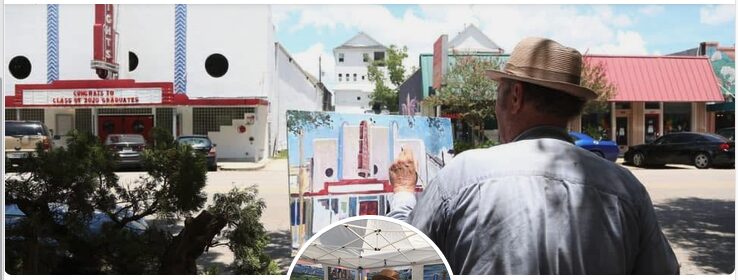
An orange traffic sign might seem an unlikely ally for an artist. For Arthur Deatly, it provided the perfect place to paint Houston.
He wanted a view looking east along Fairview toward downtown, but road construction complicated the scene. Then he discovered that a large flashing arrow sign, directing motorists into the middle lane, offered a protected spot behind it—and an unobstructed view.
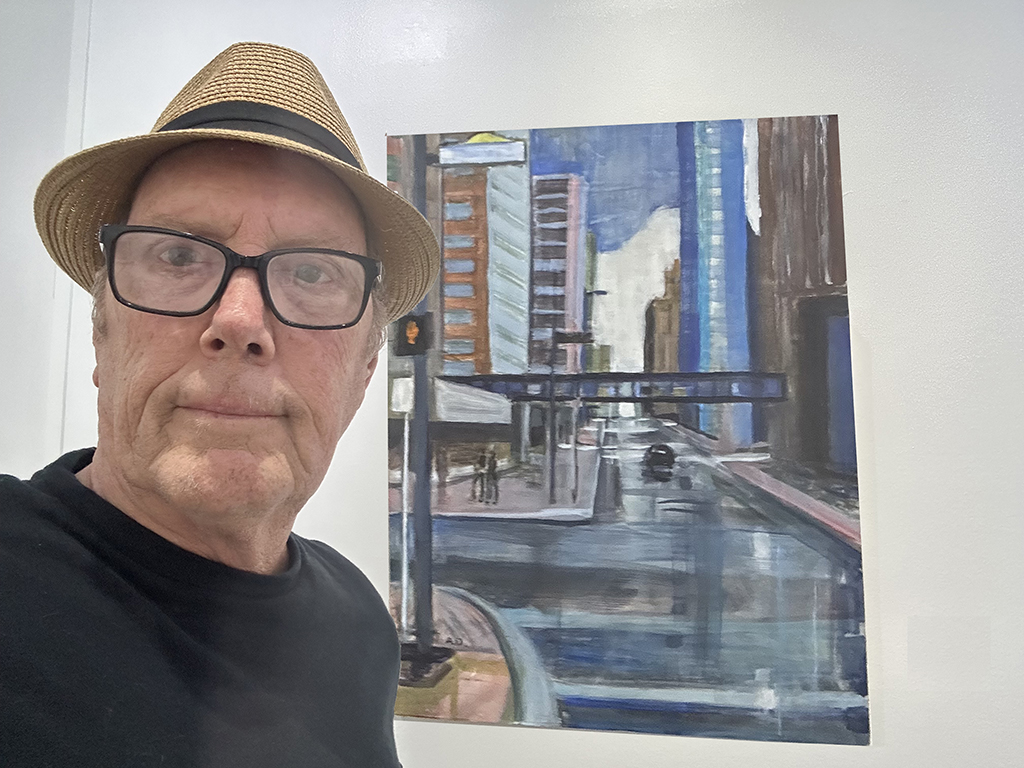
Houston artist Arthur Deatly
It is the kind of opportunity a painter finds by showing up, looking closely, and letting the city reveal itself.
Deatly grew up in Houston and has been coming to Montrose since the late 1960s.
His recent Montrose series began with two Art Deco apartment buildings on Fairview: matching structures with inviting verandas, a courtyard, and a distinctive architectural style.
For drivers passing through, those details can disappear in a glance. For Deatly, they tell a deeper story.
“I think what most passersby driving through don’t realize is that Montrose is a neighborhood of homes,” he says. Some date to the 1920s.
Working outdoors, directly from observation—a practice known as plein air painting—Deatly captures a neighborhood layered with personal memories.
“The ghosts of the old neighborhood still haunt me,” he says. Those memories guide his choice of subjects. “My primary goal as a plein air painter is to preserve what was here in my painting.”
His Downtown/Bayou series approaches Houston through composition and contrast: buildings erected before World War II sharing space with modern and postmodern neighbors. Their arrangement matters as much as their individual histories.
But buildings also hold people’s experiences. In a recent series, Deatly went inside Houston bars to draw their patrons, including those at George Country Bar, Alabama Ice House, Michael’s Outpost, and La Carafe.
“When those places go, like a favorite restaurant, it leaves a hole,” he says.
Bars, gardens, bridges, parks, streets, and bayous collectively form his Houston. He finds ample material in the places that make everyday life recognizable.
That attachment extends to the artists who live here. Discussing the Bayou City Art Festival, Deatly acknowledges the importance of its selection process while wishing the committee would reserve space specifically for local artists. He also points to the Heights’ First Saturday Arts Market as a welcoming venue. His exhibition outlets include Reeves Art Gallery and, for his Galveston paintings, Pearl Gallery.
Teaching in public schools around Houston reinforced his belief in the city’s cultural richness.
“There is more that unites us than can ever divide us,” he says.
He wants stronger connections between cultural centers and schools in outlying communities, where distance from the central city can encourage isolation or misunderstanding.
Asked what future viewers might discover in his paintings, Deatly hopes they will recognize a vibrant, bustling Houston with strength and character.
Whether its buildings, parks, and bars will still exist is another question.
“There will be ghosts to haunt them as well,” he says.
His paintings give those future ghosts somewhere to live.


Comments are closed.